


Heavy-Duty Carbon Steel Button Rivet Locking Nuts Set - Durable, Rustproof, Bolt-Compatible Industrial & Furniture Hardware for Panel Fixing, Sheet Metal Repair
Heavy-Duty Carbon Steel Button Rivet Locking Nuts Set - Durable, Rustproof, Bolt-Compatible Industrial & Furniture Hardware for Panel Fixing, Sheet Metal Repair
BUNDLE & SAVE
Couldn't load pickup availability

Heavy-Duty Carbon Steel Button Rivet Locking Nuts Set - Durable, Rustproof, Bolt-Compatible Industrial & Furniture Hardware for Panel Fixing, Sheet Metal Repair


Secure Panel Fastening
Secure Fastening for Thin & Hollow Panels
Metal expansion fasteners designed to open behind the panel as you tighten—helping create a firm connection where an ordinary screw may not have enough material to grip.
The sleeve opens behind the surface while tightening.
Designed for everyday fastening and repair projects.
Select the size that matches your panel and hardware.

How It Works
Tighten. Expand. Grip Behind the Panel.
Tightening the screw causes the metal sleeve to expand behind the panel, creating a larger rear contact area.
Insert
The compact anchor passes through the prepared hole.
Tighten
The screw draws the anchor mechanism into position.
Expand
The sleeve opens behind the panel.
Secure
A wider rear contact area helps create the grip.
The hold happens behind the surface.

Straightforward Installation
Four Simple Installation Steps
Use a correctly prepared hole and a compatible screwdriver or driver for the basic installation method shown.
Prepare a clean hole matched to the required anchor diameter.
Push it through until the flange rests against the panel.
Tighten gradually with a compatible Phillips driver.
The sleeve expands behind the panel to create the grip.

3 Size Options
Choose the Right Size for the Job
Compare thread diameter and body length before ordering.
| Size | Thread | Body Length | Head Diameter |
|---|---|---|---|
| M4 × 20 | 4 mm / 0.16" | 20 mm / 0.79" | 16 mm / 0.63" |
| M5 × 25 | 5 mm / 0.20" | 25 mm / 0.98" | 18 mm / 0.71" |
| M6 × 25 | 6 mm / 0.24" | 25 mm / 0.98" | 18 mm / 0.71" |

Metal Construction
Solid Construction Where the Grip Matters
The metal structure provides the rigidity needed for controlled expansion behind compatible panels.
Forms the rear gripping structure during tightening.
Provides a stable contact point on the front surface.
Transfers screw tightening into expansion action.
Metal where the grip matters.

Purpose-Built Details
Small Hardware. Functional Details.
Head shape, screw engagement and sleeve geometry all contribute to the installation process.
Broad front contact for a stable installed surface.
Works with compatible commonly used drivers.
Supports consistent engagement during tightening.

Zinc-Plated Finish
Built for Everyday Corrosion Resistance
The zinc-plated surface helps protect the underlying steel from everyday oxidation, wear and handling.
Helps reduce direct environmental exposure of the steel.
Bright metal finish creates a professional installed look.
Suitable for common indoor garage and DIY applications.

Panel Applications
Designed for Compatible Thin & Hollow Panels
Useful where conventional screws have limited material thickness available for thread engagement.
Thin Metal
For compatible sheet-metal panels and light enclosures.
Furniture Panels
For compatible cabinets and hollow furniture sections.
Fiberboard
Creates rear contact when material and thickness are suitable.
Gypsum Board
Use only where thickness, hole size and intended load are compatible.

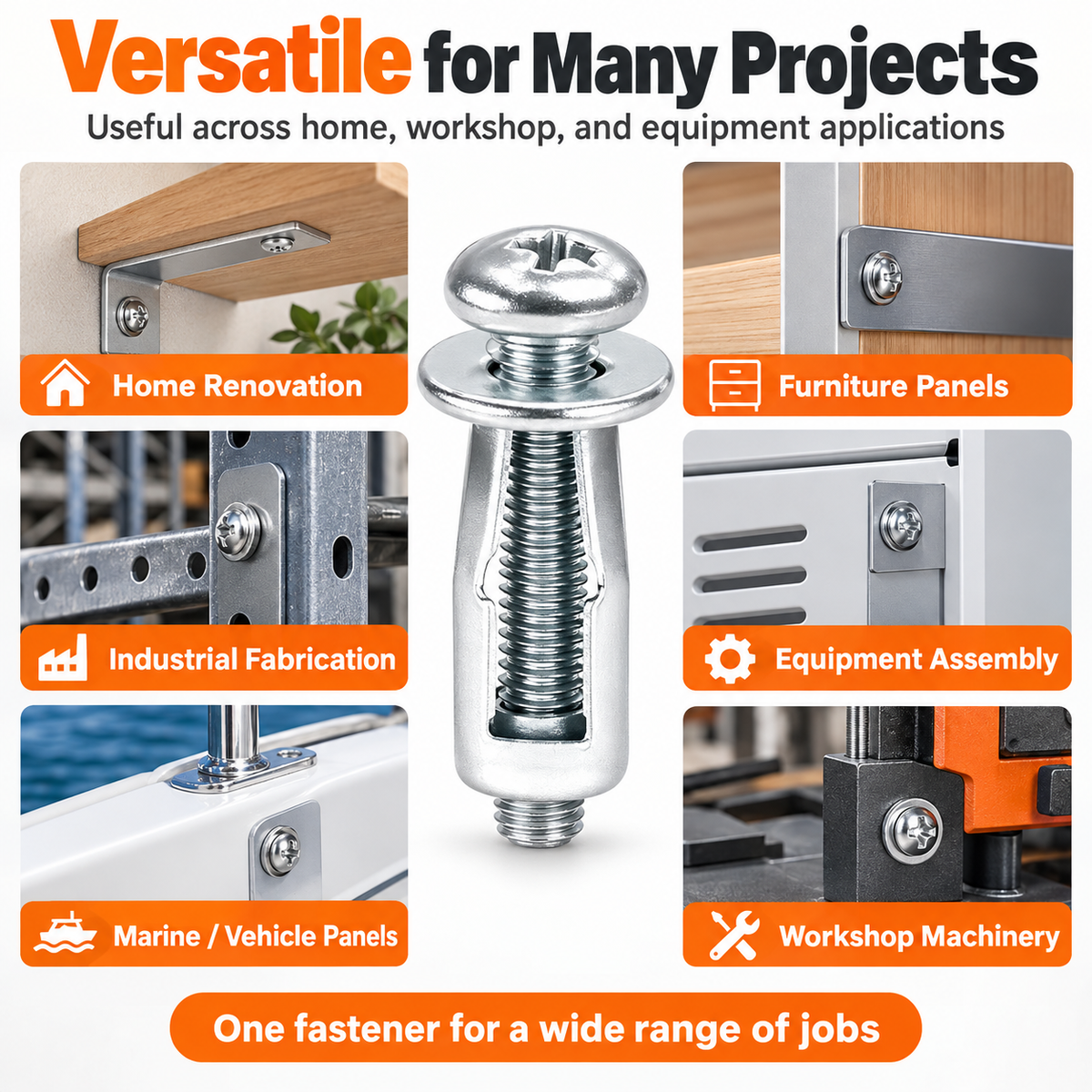
Home · Garage · Workshop
One Fastener. Plenty of Projects.
Useful for compatible non-structural repairs, mounting and everyday DIY fastening projects.
Re-secure compatible brackets and hardware.
Useful for compatible panel-mounted brackets.
Repair thin or hollow furniture components.
Useful for light enclosures and workshop panels.
Keep extras ready for everyday DIY repairs.
Useful for compatible covers and access panels.

Why Expansion Fastening?
Expansion Fastener vs. Ordinary Screw
An ordinary screw mainly relies on surrounding material for thread grip. An expansion fastener adds contact behind a compatible panel.
When there is limited material for a screw to engage, expansion behind the panel provides another fastening option.
Frequently Asked Questions
Before You Start the Job
Check your material, panel dimensions and installation conditions before choosing the fastener.
What type of panels are these designed for?
They are intended for compatible thin and hollow panel applications where enough clearance exists behind the surface for the expansion sleeve to open.
Do I need access to the back of the panel?
The fastener can be installed from the accessible side when sufficient hollow space is available behind the panel for expansion.
Do I need a special installation tool?
The basic method shown uses a correctly prepared hole and a compatible screwdriver or driver. Follow the requirements for the specific size you purchase.
How do I choose between M4, M5 and M6?
Compare thread diameter, body length, panel thickness and your mating hardware before ordering. Use verified grip-range information where available.
Can I use these in solid concrete?
No. Concrete and masonry require anchors specifically designed and rated for those materials.
Are the fasteners completely rustproof?
The zinc-plated finish helps resist everyday corrosion, but it should not be considered completely rustproof or marine-grade unless specifically tested for those conditions.
How much weight can one fastener hold?
Holding performance depends on fastener size, panel material, panel thickness, hole preparation and installation quality. Use verified manufacturer load data for load-critical projects.
Should I tighten it as hard as possible?
No. Tighten gradually until the fastener is properly seated. Excessive tightening can damage the panel, screw or expansion anchor.
Ready for the Next Project
Get a Better Grip in Thin & Hollow Panels
Compact metal expansion fasteners for compatible furniture, cabinet, sheet-metal and workshop applications.
Choose Your Size